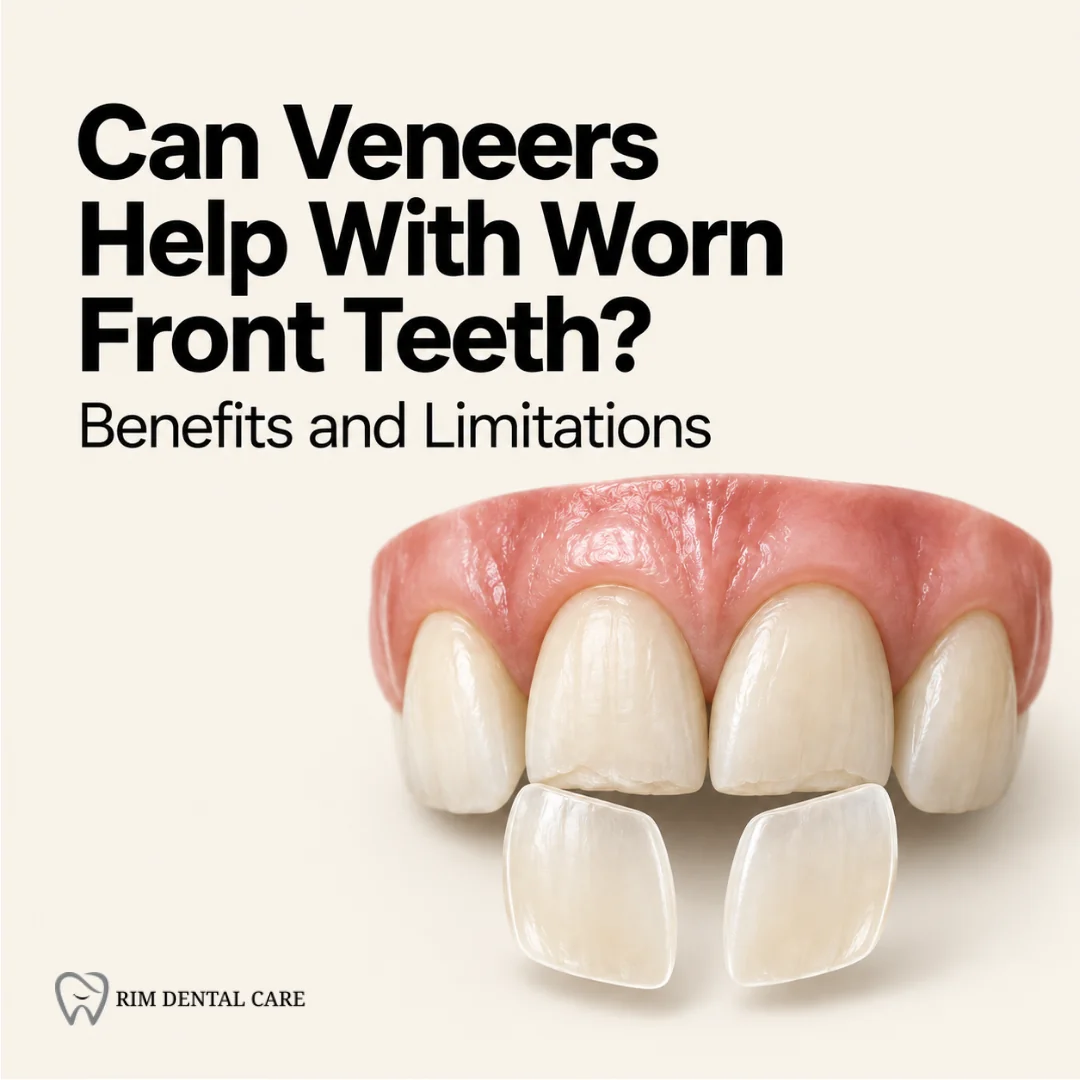
Many people notice their front teeth look short, chipped, or faded. Worn front teeth can hurt dental aesthetics and make a smile feel old. This common issue links to enamel loss, teeth grinding, or acid wear. Cosmetic dentistry and tooth restoration can help.
One clear fact, veneers can hide worn enamel and improve smile appearance. They act like thin porcelain shells that cover front teeth. Here you will understand the benefits and limitations, plus candidacy, the process, and care.
Veneers serve as a fantastic option for improving worn front teeth. They can cover enamel loss, offering a fresh look that enhances dental aesthetics. These thin shells made of porcelain bond directly to the teeth, hiding imperfections like chips and stains. Patients often experience significant cosmetic improvements after getting veneers.
After treatment, many notice a boost in confidence due to their enhanced smile. Dental veneers also provide protection against further damage while maintaining oral health. This restoration technique allows individuals to achieve the smile makeover they desire without extensive procedures like dental crowns or complex treatments.
Veneers offer several benefits for worn front teeth. They can effectively restore tooth structure lost due to enamel erosion, making smiles look healthier. These thin shells of porcelain bond well to teeth, enhancing dental aesthetics.
Many people appreciate the bright, white appearance veneers provide. This cosmetic dentistry option also guards against future damage by shielding vulnerable teeth from chips and wear.
Limitations exist as well. Veneers require some enamel removal for proper placement, which may concern some patients about long-term effects on oral health. Not everyone qualifies for this treatment; severe decay or gum disease may prevent the use of veneers altogether.
First-hand experience shows that while veneers bring aesthetic improvement, they need ongoing care to maintain their appeal and functionality.
Many people seek veneers for smile enhancement. The process starts with a consultation to determine candidacy. Candidates should have healthy teeth and gums, free from decay. Those with enamel erosion may also benefit from dental veneers.
The application of porcelain veneers involves several steps. Dentists prepare the teeth by removing a small amount of enamel to create space for the veneer. Next, they bond the custom-made veneers to the front of the teeth using dental adhesive.
After placement, oral care becomes essential for maintaining both dental health and aesthetics. Regular brushing and visits to the dentist help preserve these cosmetic restorations over time.
Yes. Dental veneers can cover worn front teeth. They help with tooth restoration and dental aesthetics. Veneers can hide enamel loss and worn edges. They can give a smile makeover and smile enhancement.
Veneers give fast aesthetic improvement. They match tooth color and shape. Porcelain and ceramic material veneers resist stains. They can work with teeth whitening to improve smile color. They boost cosmetic dentistry results and oral health confidence.
Severe enamel erosion may need other treatment options. If tooth structure is low, crowns or other restorations may work better than veneers. Veneers do not fix deep tooth chips or severe decay. Talk to a dentist to compare dental crowns and tooth restoration choices.
Veneers need some enamel removal. This step is part of the tooth restoration process. Good oral hygiene keeps dental health strong. Poor care can cause problems like decay or gum issues. A dentist must check and guide you.
Veneers can last many years with care. Avoid hard bites and habits that cause tooth chips. Brush and floss for oral health. Visit your dentist for checkups. Ask about treatment options if issues arise.
Tell us a little about what you need — we'll be in touch shortly.
6028 WORTH PKWY STE 101, SAN ANTONIO, TX 78257-5071, United States
Hi! I'm Tooth fairy! Your AI Assistant Ask me anything