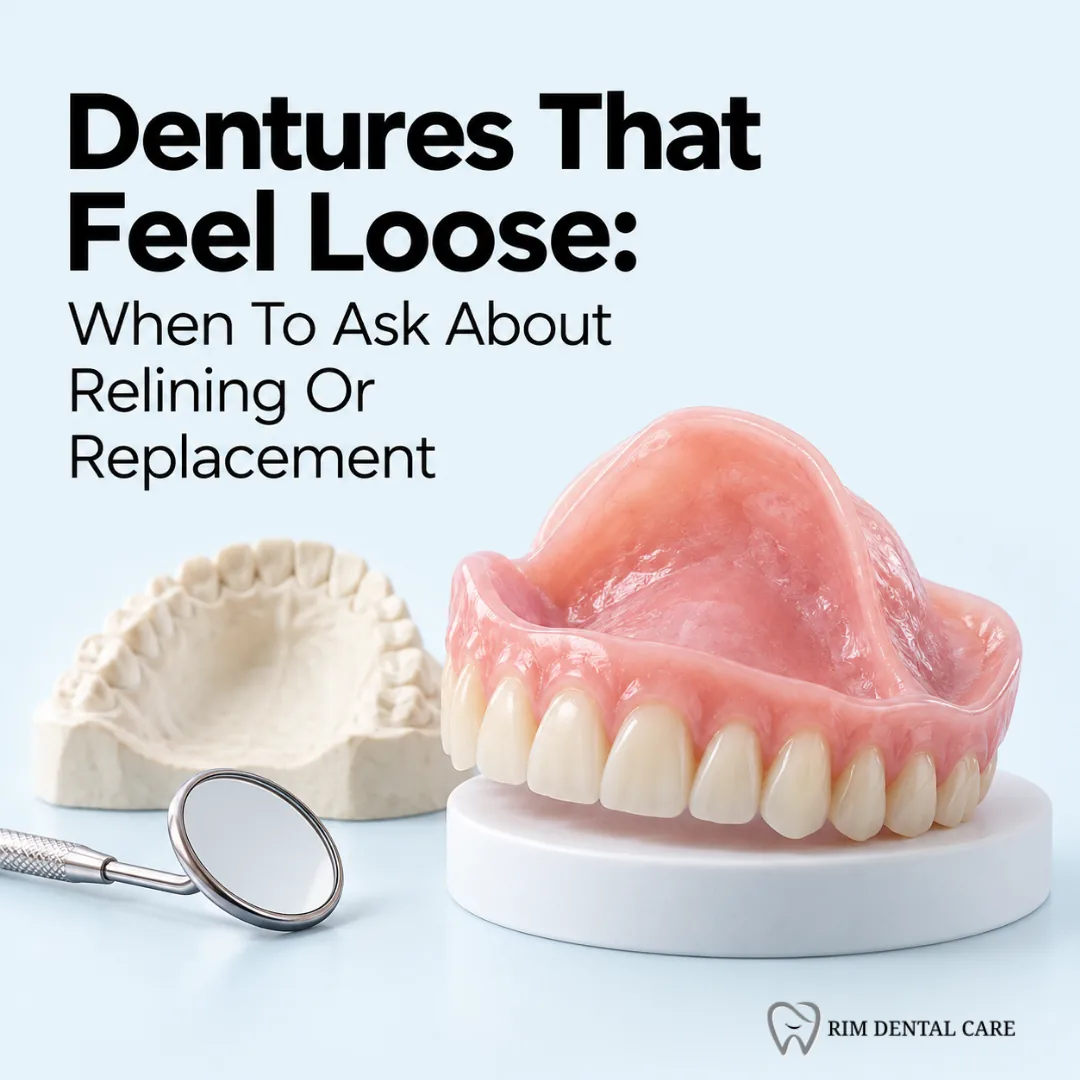
Many people wear dentures that start to feel loose. They may slip while talking or hurt when chewing. Some use more adhesive. Others avoid favorite foods.
Bone loss and gum changes often cause a poor fit over time. A loose denture is not just annoying, it can harm oral health. Here you will understand how to spot warning signs, what causes the
Common Signs That Dentures Are Too Loose
Loose dentures love to make an entrance at the worst times, like mid-sentence or during dinner. If your mouth feels more like a wobble board than a smile machine, it’s time to get some answers.
Food or words can move a denture out of place. That shift makes speech slur or food catch. Many wearers turn to denture adhesive more often. The extra glue rarely fixes fit if bone loss or gum changes cause the slip.
One wearer said the denture slid while laughing at a movie. A dentist can check fit, bone loss, and mouth muscle support. Relining may restore comfort for months or years. A full replacement or implant-retained dentures suit some patients better.
Sore spots and irritation can turn a pleasant meal into a painful experience. Loose dentures often rub against the gums, causing discomfort. This friction leads to sore spots that make smiling difficult.
A person using loose dentures might find themselves wincing while chewing or talking. Gum tissue changes over time, which contributes to this issue.
For example, someone noticed her dentures slipping more than usual. Soon after, she developed sore areas along her gums. She started to rely heavily on denture adhesive, hoping it would solve the problem.
Unfortunately, it did not; irritation only worsened with time. Seeking professional help became essential for her oral health and comfort in daily life.
Using too much denture adhesive often points to loose dentures. Many people find themselves reaching for that little tube more often than they should. This reliance can indicate a poor fit, making daily tasks uncomfortable.
The right balance between comfort and stability is crucial. Regular check-ups help identify if adjustments or relining are needed.
Those who notice their dentures slipping also experience discomfort in social situations. Feeling self-conscious while speaking or eating can affect confidence levels drastically. Seeking professional advice becomes important in such cases, especially when considering options like relining or replacement.
Loose dentures often stem from changes in the mouth over time. Bone and gum tissue can shift, affecting how well the dentures fit. Weight changes can also make them feel looser than before. Worn-out denture liners may lead to discomfort as well.
Bone resorption happens when the jawbone loses density. This often occurs after tooth loss. As teeth support the bone, removing them allows it to weaken over time. Changes in gum tissue also contribute to challenges with dentures that feel loose. As gum tissue shrinks or changes shape, dentures may not fit snugly anymore.
These changes can be uncomfortable and frustrating. Many people find their dentures slip while eating or speaking due to these issues. Relying more on denture adhesive becomes common as a result of poor fit, which only offers a temporary solution.
Regular evaluations by professionals help address bone loss and gum support, ensuring optimal comfort with dental prosthetics.
Bone resorption and changes in gum tissue can affect how dentures fit. Weight fluctuations can also play a significant role in this equation. Gaining or losing weight shifts the jaw structure and alters the shape of gums. Even minor changes can make previously snug dentures feel loose.
This lack of fit leads to discomfort while speaking or eating. Some individuals may start relying on denture adhesives as a quick fix, but that often does not address the underlying issue.
Regular check-ups with a dental professional help identify these problems early and adjust the fit accordingly. Staying attentive to oral hygiene also keeps gums healthy, which is essential for proper support regarding dental prosthetics like dentures.
Dentures experience wear and tear over time, just like any other tool. Regular use can cause them to lose their original shape. Everyday activities like eating or speaking put pressure on dentures. This constant force can lead to a gradual decline in fit and comfort.
Materials also break down as they age. Acrylic resin may wear down or become stained after years of use. Changes in the mouth, such as gum recession or bone loss, can further worsen these issues.
Loose dentures create discomfort and may require adjustments or even a full replacement if the situation becomes severe.
Relining adjusts the fit of your dentures, while replacement involves getting a whole new set. Understanding this difference helps you decide which option suits your needs better.
When to consider a denture reline
A patient should consider a denture reline if their dentures feel loose or uncomfortable. Loose dentures can lead to sore spots in the mouth and irritation. If speaking or eating causes slipping, it’s time to look for solutions. Increased use of denture adhesive signals that something isn’t right with the fit.
The relining process creates a new layer on the underside of the denture. This adjustment helps improve comfort and stability without needing a full replacement. Regular evaluations by a dental professional can help maintain proper fit, ensuring comfort during daily activities.
Full denture replacement may become necessary for various reasons. Major changes in oral health can lead to this decision. Severe bone loss often alters the fit of dentures significantly.
If someone experiences extensive gum tissue deterioration, a new set becomes crucial for comfort and function.
Wear and tear from years of use can also signal the need for fresh prosthetics. Cracks or breaks affect both appearance and usability. Dentures that have lost their shape or structural integrity cannot provide proper support anymore, making replacement vital.
Seeking professional guidance ensures one makes an informed choice about dental solutions that enhance oral health and comfort.
Implant-retained dentures offer improved stability for those struggling with fit. They attach securely to the jaw and help keep dentures in place. Regular evaluations can also catch any changes before they become problems. Staying ahead of any issues can save a lot of discomfort later.
Implant-retained dentures offer a strong solution for those with loose dentures. These options use dental implants to anchor the denture securely in place. Instead of relying solely on gums, they attach to metal posts placed in the jawbone. This setup improves stability and comfort.
Patients often notice a huge difference in their day-to-day lives. Speaking and eating become much easier without worrying about slipping or shifting. Mark, who struggled with traditional dentures for years, found relief with implant-retained ones.
He now enjoys his meals without fear of discomfort or embarrassment. This option may help those seeking better oral health and peace of mind regarding their dental prosthetics.
Regular evaluations for fit and comfort can make a big difference in the denture experience. Dentures can shift over time due to bone loss or changes in gum tissue. A dental professional should check how well they fit every few months. This helps spot issues early, like discomfort or loose areas.
Patients often feel more confident after adjustments. With proper fittings, speaking and eating become easier. At times, a simple reline may fix looseness without needing a full replacement. Keeping up with oral hygiene is also key to maintaining comfort and health with dentures.
Loose dentures can result from changes in your gums or jawbone over time. Weight loss, age, and gum disease all play a role. If you notice looseness, it is wise to talk to your dentist.
Consider relining if your dentures slip or shift during normal activities like eating or talking. A reline adjusts the fit of the denture to match changes in your mouth without needing a full replacement.
If your current dentures are worn out, cracked, or have significant damage, it may be time for replacements. Your dentist will help determine whether relining is enough or if new ones are necessary.
During a reline appointment, your dentist will take an impression of your gums while wearing the existing denture; this helps create better-fitting material on the inside surface of the denture for improved comfort and stability.
Tell us a little about what you need — we'll be in touch shortly.
6028 WORTH PKWY STE 101, SAN ANTONIO, TX 78257-5071, United States
Hi! I'm Tooth fairy! Your AI Assistant Ask me anything