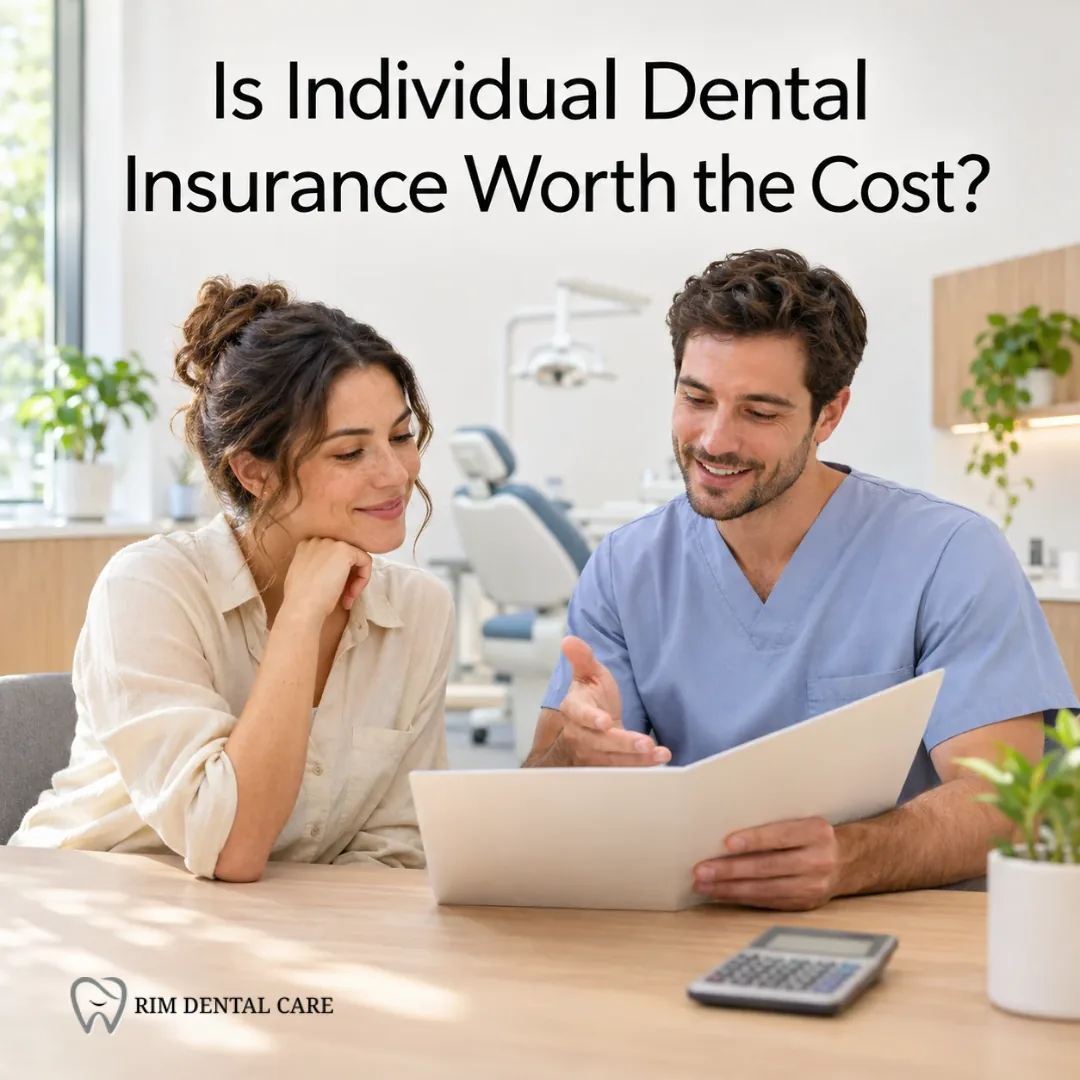
Many people worry about dental bills, and they look for a dentist they can trust. They ask, is this plan worth the cost, or will they pay more out of pocket?
Individual dental insurance often covers routine exams and cleanings, and it can cut costs on some basic work. Here you will know what plans cover, what they leave out, and how to weigh premiums against likely bills.
Individual dental insurance covers several important areas of care. It helps with preventive visits, basic procedures, and even major services if you need them later on.
Cleanings, routine exams, and X-rays catch problems early, they lower out-of-pocket expenses. Many plans cover most of these visits, so patients get regular checks that protect oral health and create cost savings.
Patients who go often let dentists spot decay and gum disease before they worsen. Next, basic procedures show how plans help pay for fillings, simple extractions, and repairs.
Routine exams and preventive care, like cleanings and X-rays, lower the chance of big problems later. Plans usually cover two checkups a year, then they kick in for basic procedures, such as fillings and simple extractions, which cut out-of-pocket expenses. Patients find that regular care keeps costs down, and dental coverage makes routine exams easier to schedule.
Basic procedures heal small issues before they grow. Dentists fix cavities, remove small infections, and fit simple restorations. A plan that covers these services can save money, and it helps people avoid emergency bills. Those who value oral health often choose coverage for steady savings and smoother care.
Fillings, root canals, crowns, and extractions count as major services, and they often carry higher fees than preventive care, so dental coverage matters. Dentists may also bill for oral surgery and complex prosthetics, and insurers commonly cover a portion after waiting periods.
Patients should note that major procedures often hit annual maximums, and out-of-pocket expenses can climb quickly, especially for multi-step work. Next, examine monthly premiums, deductibles, and annual maximums in the cost of individual dental insurance.
The cost of individual dental insurance can vary widely. People will pay monthly premiums, which are just the initial costs to keep the plan active. Then there are deductibles and copays for services used throughout the year.
Additionally, many plans have annual maximums that limit how much they will cover. This means careful planning is key to avoid surprises down the road!
Monthly premiums for individual dental insurance vary. People often pay between $20 and $50 each month. Factors like coverage level and age play a role in this cost. Premiums are an ongoing expense, so budgeting is key.
This amount helps cover exams, cleanings, and other services. Sometimes, plans may offer lower premiums but higher deductibles or copays. Individuals must weigh these costs against the benefits of having dental coverage to see what works best for them.
Moving from monthly premiums, it’s important to look at deductibles and copays. A deductible is the amount a person must pay before insurance helps cover costs. For example, if someone has a $50 deductible, they must pay that much out of pocket first.
Copays are different; they are fixed amounts paid for specific services. If a dental visit costs $100 and the copay is $20, the insured only pays that $20 at the time of service. These costs add up and can impact overall expenses significantly when considering how much dental care might be needed each year. Understanding these two terms helps with budgeting for necessary oral health needs while assessing any available dental plans.
Annual maximums refer to the highest amount an insurance plan will pay for dental care in a year. Some plans might set this cap at $1,000 or $2,000. Once that limit is reached, patients usually bear all costs for additional services until the next year begins. This can be a big factor for anyone considering individual dental insurance.
Patients need to consider their expected dental work when looking at these maximums. If they anticipate major procedures, they may want a plan with a higher annual limit. Understanding these caps helps in choosing the best coverage option and planning for future expenses and potential visits to the dentist.
Paying for dental care involves weighing the costs of insurance against out-of-pocket expenses. Many people find that having insurance can save them money on routine visits and necessary procedures. However, others may prefer paying directly for their treatments without any intermediary. Understanding these options can clarify what choice is best for individual needs.
Below are typical out-of-pocket costs for common dental procedures.
| Procedure | Typical Cost Range (USD) | Average Cost (USD) | Common Insurance Coverage |
|---|---|---|---|
| Routine cleaning (adult) | $75 - $200 | $125 | Preventive often 100% |
| Routine exam | $50 - $150 | $90 | Preventive often 100% |
| Dental X-rays (bitewing) | $25 - $75 | $50 | Often covered as preventive |
| Filling, amalgam (one surface) | $100 - $250 | $175 | Basic 60% - 80% |
| Filling, composite (one surface) | $150 - $350 | $250 | Basic 50% - 80% |
| Root canal, front tooth | $300 - $1,000 | $650 | Major 50% after deductible |
| Root canal, molar | $800 - $2,000 | $1,400 | Major 50% after deductible |
| Dental crown (porcelain) | $800 - $2,500 | $1,300 | Major 50% after waiting period |
| Simple extraction | $75 - $300 | $180 | Basic 50% - 80% |
| Surgical extraction (impacted) | $200 - $600 | $400 | Major 50% after deductible |
| Single tooth implant | $1,500 - $6,000 | $3,200 | Often not covered, or partial only |
| Partial denture | $700 - $2,500 | $1,200 | Major 50% after waiting period |
| Full denture (per arch) | $600 - $2,500 | $1,000 | Major 50% after waiting period |
| Teeth whitening (in-office) | $300 - $1,000 | $600 | Usually excluded, cosmetic |
| Emergency visit (exam, X-ray) | $100 - $300 | $180 | Varies, sometimes limited |
- Costs vary by region, dentist, and complexity.
- Insurance often pays most preventive care.
- Basic work usually has partial coverage.
- Major services often face waiting periods.
- Cosmetic items rarely receive benefits.
- Implants can be the costliest, out-of-pocket.
- Annual maximums can cap benefit payouts.
- Deductibles reduce initial benefit amounts.
Most people should visit the dentist about twice a year. These visits help catch problems early. Regular check-ups can save money in the long run. With dental insurance, preventive care often costs less or nothing at all.
Some individuals might need to go more often. If someone has gum disease or cavities, they may see the dentist every three to four months. Others who wear braces or have special needs might also require extra visits. Frequent check-ups keep oral health on track and reduce out-of-pocket expenses for future treatments.
Having individual dental insurance brings many perks. It can lead to money saved on regular check-ups and cleanings, making visits to the dentist less stressful. Plus, it opens up a wider choice of dentists who accept your plan.
Preventive care saves money. Regular check-ups and cleanings help catch problems early. This can stop bigger issues down the road, like cavities or gum disease. With individual dental insurance, most plans cover these visits fully or at a low cost.
These savings add up quickly over time. For example, a routine exam might cost $50 out of pocket without insurance. With coverage, it could be covered entirely or have only a small copay. Investing in preventive care means better oral health and less spending on dental work later on.
Having individual dental insurance allows access to a larger group of dentists. This wide network can make finding the right dentist easier. More options mean patients can choose someone they feel comfortable with.
Insurance plans often have agreements with many providers. This means that going to an in-network dentist typically costs less for patients. They enjoy better savings on routine exams and basic procedures too.
It broadens choices and helps ensure quality care without high out-of-pocket expenses, making oral health more accessible for everyone involved.
Dental insurance helps with sudden issues like a toothache or an injury. These problems can happen without warning, leaving people stressed and worried. Individual dental plans often cover emergency visits, which is a huge relief.
Having this support means peace of mind. It allows individuals to seek help right away without the burden of high costs. Many plans cover urgent care services, so patients can get back to their daily lives quickly.
Affordable options may also include treatment for serious conditions. This access ensures that everyone maintains good oral health during tough times.
Dental insurance can seem great, but it’s not without its downsides. Some plans come with waiting times before coverage kicks in, and many don’t cover cosmetic work at all.
Waiting periods can be a key part of individual dental insurance. Many plans require members to wait before they can use their benefits. This means you might have to hold off on certain procedures for a few months after signing up.
For example, basic services may come with a waiting period of six months. Major services could take even longer, sometimes up to a year. This delay can affect those needing immediate care for things like fillings or crowns. While it offers financial protection later on, it is essential to consider these waiting times when deciding if the coverage is worth it.
Exclusions and limitations often come with individual dental insurance plans. These can affect what is covered, leaving some services out. Many plans may not cover cosmetic work, like teeth whitening or veneers. Some treatments may have waiting periods too, meaning coverage does not kick in right away.
Patients should also check for annual maximums on the amount of money the plan will pay each year. If a person needs extensive dental work, they might find themselves paying out of pocket after hitting this limit.
It's essential to read the fine print to avoid surprises later on, especially regarding preventive care and routine exams that keep oral health in check.
Cosmetic procedures often fall outside standard dental insurance coverage. Many plans do not include treatments like teeth whitening, veneers, or orthodontics for adults. So, individuals seeking a brighter smile or straighter teeth may find themselves paying out-of-pocket expenses.
These costs can add up quickly. A single cosmetic treatment might cost hundreds to thousands of dollars. This makes it essential to understand what dental insurance covers and what it does not.
Some people may be caught off guard by these gaps in their coverage, facing unexpected bills after visiting the dentist. It's important to read the fine print and ask about exclusions before getting any procedure done.
How to decide if dental insurance is worth it? First, think about your own dental health. Consider how often you visit the dentist and what work you might need. Then, calculate your likely yearly costs without insurance. Finally, check different plans for what they cover and how much they cost. This way, you can find the best option for your needs.
People looking for a dentist need to think about their dental health needs. This helps them decide if individual dental insurance is worth the cost.
Understanding these needs makes it easier to find an insurance plan that fits best. Next, explore how much money individual dental insurance really costs and what you get in return.
Estimating yearly dental expenses is crucial for understanding the value of individual dental insurance. A good estimate helps highlight what one might pay out of pocket for dental care.
Thinking through these expense factors helps someone decide if individual dental insurance truly provides worth and coverage in line with personal needs and budgetary goals.
Finding the right dental insurance can feel like a puzzle. It’s important to choose wisely to benefit your oral health and wallet. Here are some factors to consider while evaluating plan options.
Individual dental insurance helps cover the costs of dental care. It can pay for check-ups, cleanings, and procedures like fillings or crowns.
It depends on your needs. If you visit the dentist often or need major work done, it might save you money in the long run. But if you rarely go to the dentist, paying for insurance may not be worth it.
Most plans cover routine visits and preventive care at little to no cost. They also help with basic services like fillings and sometimes even major work like root canals.
Look for a plan that fits your budget and covers what you need most. Check out waiting periods, coverage limits, and whether your preferred dentist accepts that plan before making a decision.
Tell us a little about what you need — we'll be in touch shortly.
6028 WORTH PKWY STE 101, SAN ANTONIO, TX 78257-5071, United States
Hi! I'm Tooth fairy! Your AI Assistant Ask me anything