Many people worry about tooth pain and cavities. They do not know what happens at a fluoride visit. Patients may fear messy trays or long chair time. This makes them skip helpful care.
A professional fluoride treatment adds a layer of protection to tooth enamel. It helps lower the chance of cavities and sensitivity. Here you will understand each step of the appointment, what to do after, and the main benefits.
Kick back in the dental chair and let your dentist handle the rest. You might feel a bit like you’re at a spa, just with fewer cucumbers and more toothbrushes.
The patient sits back in the dental chair. The hygienist explains the plan in plain terms.
Next, the appointment moves to the actual fluoride application and timing.
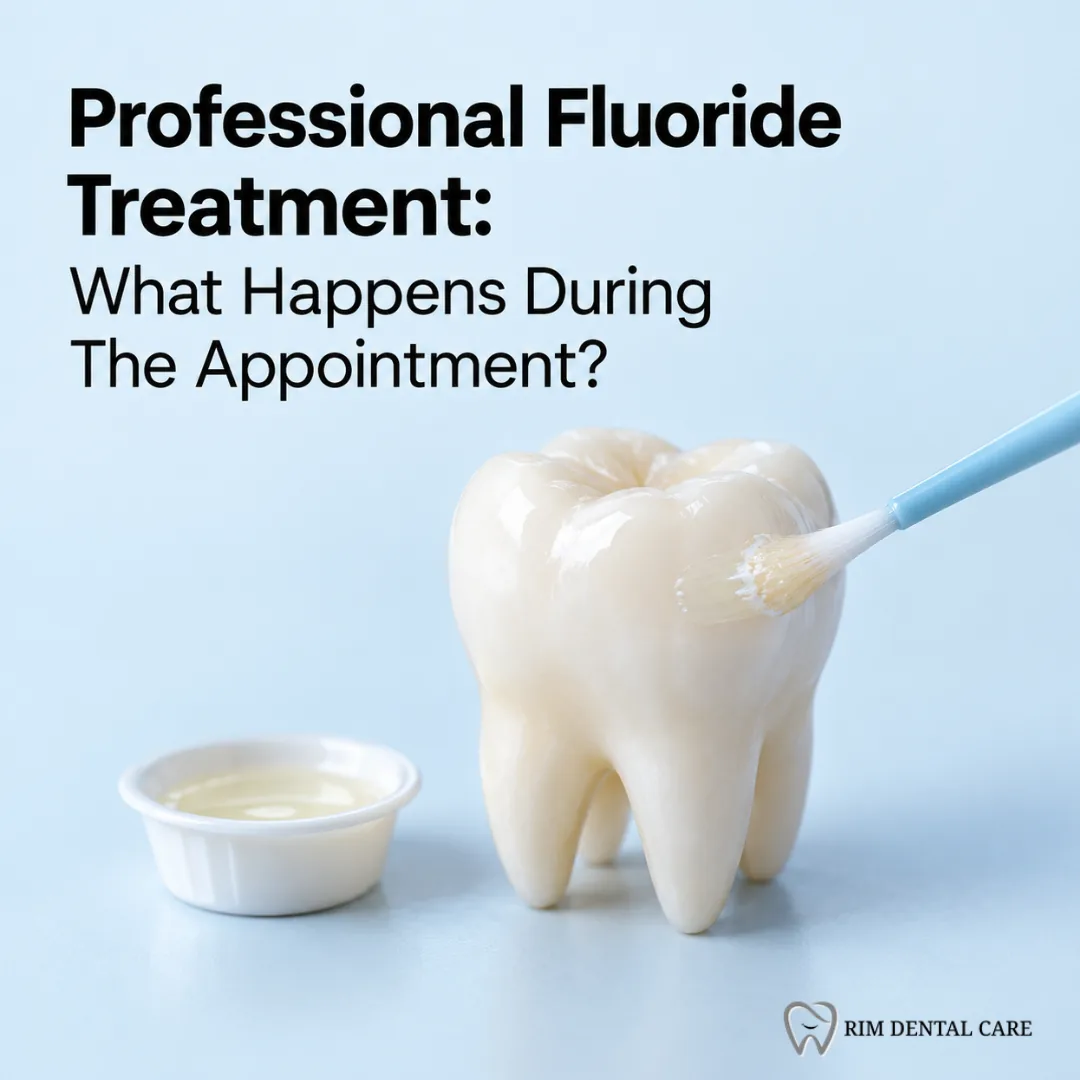
During professional fluoride treatment, dentists use three main forms of fluoride: varnish, gel, and foam. Varnish is sticky and coats the teeth well. It stays in place longer than other options, allowing for maximum absorption.
Gel comes in a tray that fits over the teeth. Patients bite down on the tray for a few minutes while the fluoride works its magic. Foam has a light texture and fills up the mouth easily. All three options help to strengthen tooth enamel and prevent cavities.
Each type of application lasts only a few minutes during an appointment. Dentists apply it with care to ensure even coverage on all surfaces of each tooth. After using any form of fluoride, patients may notice their teeth feel slick or coated—this means it's doing its job! Many people enjoy these treatments because they are quick and painless and offer strong cavity prevention benefits for better overall oral hygiene.
After applying the fluoride, patients can expect a quick session. This procedure typically lasts about 30 minutes. The dentist or hygienist will check on comfort levels throughout the appointment.
Many people notice immediate changes after treatment. Teeth may feel smooth and shiny right away. Some might even experience a mild minty taste from the fluoride gel or varnish. For most, this positive sensation is a welcome boost in tooth health and cavity prevention efforts.
Professional fluoride treatment plays a crucial role in cavity prevention. Following the session, patients need to follow specific guidelines to maintain tooth health and maximize benefits.
Following these steps aids in making professional fluoride treatment effective, enhancing oral hygiene routines in daily life.
Fluoride treatment enhances tooth health and prevents cavities. It strengthens enamel, making teeth more resistant to decay. This process protects both kids and adults from dental issues.
Regular fluoride applications can be a significant improvement in oral hygiene routines.
Patients often notice smoother teeth after treatment, which makes brushing easier. Fluoride also aids in overall dental care by providing lasting benefits for gum health. A trip to the dentist for fluoride is a wise step toward maintaining bright smiles and a healthy mouth.
Professional fluoride treatment is a dental procedure that helps strengthen teeth and prevent cavities. It involves applying a concentrated fluoride solution to your teeth during an appointment.
During the appointment, your dentist or hygienist will first clean your teeth. Then, they will apply the fluoride using a gel, foam, or varnish. You may need to avoid eating or drinking for about 30 minutes afterward to let it work effectively.
The frequency of treatments depends on individual needs. Some people might benefit from it every six months while others may require it more often if they have high cavity risk.
Most people experience no side effects at all; however, some might feel slight sensitivity after the application. If you notice anything unusual, be sure to contact your dentist right away for advice.
Tell us a little about what you need — we'll be in touch shortly.
6028 WORTH PKWY STE 101, SAN ANTONIO, TX 78257-5071, United States

Hi! I'm Tooth fairy! Your AI Assistant Ask me anything