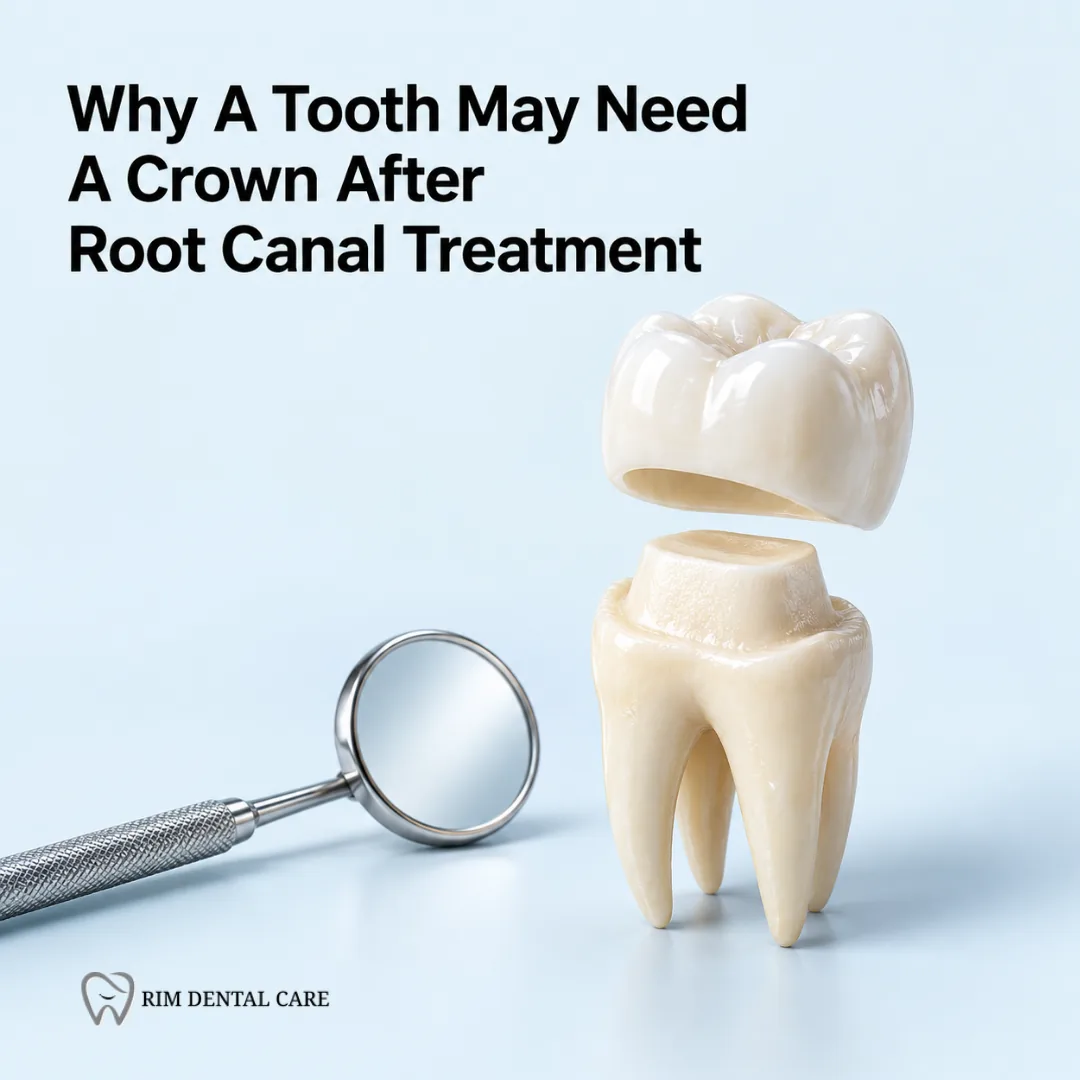
Many people worry a tooth will crack or feel weak after a root canal. That fear comes from common problems like pain, sensitivity, or a visible chip after pulp treatment.
One fact is a tooth can get more brittle once the nerve and blood supply are gone. Here you will understand why dentists often recommend a dental crown after a root canal.
What Is a Dental Crown?
A dental crown is a cap that fits over a damaged tooth. Dentists use crowns after root canal or heavy tooth decay to protect the tooth structure and restore function. Crowns come in porcelain, metal, or porcelain-fused-to-metal. The dentist explains that crowns can stop tooth sensitivity and return normal chewing.
The dentist recalls a case where a crown kept a molar strong for 12 years after pulp treatment. Dentists place crowns as a common tooth restoration dental procedure in endodontics and general dentistry. Crowns help oral health by preventing fractures and sealing treated canals after a root canal.
Root canal treatment clears out infected pulp and stops tooth decay. The dentist removes the pulp, nerve, and blood supply. That loss makes the tooth drier and more brittle. Large restorations also remove healthy tooth structure.
Chewing puts stress on thin walls. Small cracks can grow into big fractures. Patients may not feel pain after pulp treatment, so they bite with normal force. The tooth then faces higher risk of breaking under pressure.
Dentists often place a post or build up a core to replace lost structure. A crown then covers the whole tooth and spreads chewing forces. The crown restores functionality and helps hide signs of treatment.
After a root canal, dentists often recommend crowns to protect the tooth from further harm. Crowns shield the tooth structure from cracking or breaking. They help restore chewing ability and keep that smile looking sharp.
Teeth lose strength after treatment, making them more vulnerable. So, getting a crown is like putting armor on your tooth.
A dental crown acts like a shield for the tooth after root canal treatment. Root canals remove infected pulp but leave the tooth weak and fragile. Crowns cover these vulnerable teeth, restoring strength and stability. They support the remaining structure, making it less likely to crack or break.
Without a crown, a treated tooth might face serious issues down the road. Tooth decay could invade more easily, causing further damage. A crown helps maintain oral health by protecting what’s left of the tooth structure after endodontic procedures. It allows individuals to chew comfortably without worrying about future problems.
After a root canal, a tooth may feel weak and fragile. A crown helps restore its strength. This cover gives the tooth stability. Patients can chew without worry or pain. Furthermore, a crown improves how the tooth looks. It matches the surrounding teeth in color and shape.
Many people cherish their smiles; they want them to shine bright. Crowns deliver that aesthetic boost while ensuring functionality stays on point.
Once she got her crown, she couldn't stop grinning! The combination of function and beauty makes crowns an essential part of post-root canal care.
A dental crown helps prevent future damage after a root canal. A tooth that has gone through this treatment often becomes weaker. It loses part of its strength and support from the pulp tissue inside.
The dentist places a crown to cover and protect the tooth structure, which shields it from cracks or fractures. This coverage gives added stability.
Crowns also keep bacteria at bay. After a root canal, the tooth can be more susceptible to decay or infection if not properly protected. A crown seals off any potential entry points for bacteria, helping maintain oral health over time. With these defenses in place, patients can enjoy their restored teeth without fear of further issues down the road.
When deciding on a crown, several factors come into play. The tooth's location and the extent of its damage can greatly affect this decision.
The location of the tooth plays a big role in deciding if a crown is needed after root canal treatment. Front teeth, like incisors, often need less support than back teeth such as molars.
Back teeth handle more pressure from chewing food. They also experience more wear and tear. A dentist may suggest a crown for these teeth to protect them better.
Patients have shared their experiences about this topic too. One patient said his back molar felt weak after treatment; he knew it was crucial to get a crown right away. Dental experts agree that placing crowns on these vulnerable areas can help maintain overall oral health and prevent future complications.
Tooth damage can vary greatly after a root canal. Some patients experience minor decay, while others face significant structural loss. If the tooth has large cavities or fractures, it may weaken considerably. A weakened tooth needs extra support to function well.
When dentists evaluate the situation, they assess how much of the tooth remains intact. They often recommend a dental crown for teeth with major damage. This helps restore strength and prevents further issues down the road.
For example, one patient had extensive wear due to grinding their teeth at night; after treatment, a crown was essential to restore both form and function.
A dental crown plays an essential role in restoring the appearance of a tooth after root canal treatment. Many patients desire their smile to shine, and crowns can assist in achieving that goal.
They come in various materials, including porcelain and ceramic, which can mimic the natural color of teeth. This allows individuals to maintain their confidence while chewing or speaking.
Selecting a crown also addresses any visible damage caused by tooth decay or previous treatments. After undergoing endodontics, patients often notice changes in how their tooth looks.
A well-fitted crown not only protects the weakened structure but also helps blend harmoniously with surrounding teeth. Ultimately, it helps keep smiles healthy and appealing for years to come.
Some situations may allow for a tooth to avoid a crown after root canal treatment. If the tooth has minimal damage, a filling or inlay might suffice. These options can restore function without covering the entire tooth with a crown. A dentist will often assess how much of the natural structure remains and decide accordingly.
Location also plays a role in this decision. Molars bear more pressure during chewing than front teeth do. So, sometimes, dentists skip crowns on front teeth if they are strong enough.
Factors like individual health and dental history matter too. In certain cases, patients may opt for monitoring instead of immediate crowning; their unique needs shape the final choice.
A tooth may need a crown after root canal treatment to protect it. The procedure removes infection and damage, but the tooth becomes weaker. A crown adds strength and helps prevent fractures.
If your tooth feels brittle or painful, it might be time for a crown. Look out for cracks or significant decay as well. These signs suggest that the remaining structure is not strong enough on its own.
It’s best to get the crown soon after your root canal; waiting too long increases risks of further damage or infection. Think of it like leaving an umbrella at home during rain, it just makes sense to cover up right away.
You can eat soft foods, but be careful! A temporary filling isn’t as strong as a permanent solution; think of it like walking on thin ice, better safe than sorry until you get that sturdy crown in place!
Tell us a little about what you need — we'll be in touch shortly.
6028 WORTH PKWY STE 101, SAN ANTONIO, TX 78257-5071, United States

Hi! I'm Tooth fairy! Your AI Assistant Ask me anything